My dearest brothers and sisters,
This is Tunia speaking. I love you so very much.
Last week I shared that pretty much everyone on Earth doesn’t have all their needs met, and that most people are trying to get their needs met in some way or the other.
And I empathize with you very much. I know Earth is incredibly hard. My heart goes out to you.
Today I would look to zoom in on one way in which people try to get their needs met. Namely, the Hero – Villain Polarization.
People have the need to feel that their life has purpose, and that they are the good guys — or at least that they aren’t the bad guys who are taking an acceptable situation and making it worse. Even service to self people will usually come up with some kind of narrative either why what they do is for the greater good, or that it doesn’t matter because everything sucks and nothing matters anyway. Or they think to themselves: “if I didn’t do this thing, someone else would do it, so I might as well be the one to do it and benefit from it.”
Now, someone could find meaning and get self-esteem by having a productive life and helping others. However, that is hard, and people are already at their limits.
So, what people often do to get their needs met is to create a Hero – Villain Polarization.
The most straightforward example is if a person on the left says: people of this minority are the oppressed victims. The villains are those evil racists or sexists or transphobes on the right. I am the hero who will fight the villain. This can lead, for example, to racial hiring quotas or to labeling a person racist just for opposing illegal immigration.
Or a person on the left goes: average people are the victims because they are getting financially squeezed by the rich. Rich people are always evil, selfish, greedy, parasitical capitalists, and they are the villains. I am the hero who will fight the villain.
Note the lack of nuance here. The person on the left pretends that people on the right are either dumb racists, or evil greedy rich capitalists who exploit their workers. Because if a person wants to fulfill their psychological need in this way, it helps to make your chosen villain completely evil.
But it’s not just some people on the left who do this. Some people on the right also create a hero – villain polarization:
A person on the right goes: average, normal, hard-working people are the victim because left-wingers are destroying the country. The villains are left-wingers, who are all destructive, narcissistic, virtue-signalling, gender-confused woke communists. I am the hero who will fight the woke villain.
Now, some people on the left are indeed behaving in a destructive way so that they can virtue signal and get their needs met. That is true. But not everyone on the left acts purely to virtue signal.
It’s also true that some people on the right are racist, and it’s also true that some people on the right really are self-interested rich capitalists. But not everyone on the right is either a racist, or a greedy selfish rich person.
The issue here is the complete lack of nuance in this hero – villain polarization. The own side is presented as the virtuous heroes who must fight the unrelenting evil on the other side, in order to protect the innocent. But reality isn’t so black and white.
It’s more productive to acknowledge that your political side probably has some imperfections and self-serving narratives, and that the other side has some genuine concerns that may currently be unaddressed. Perhaps the other side wants their concerns to be addressed in a way that would be a net negative, but even so, they may still have valid unaddressed concerns.
It’s much more productive to have a discussion if you view the other side as legitimate and having some valid concerns but overall being wrong, rather than viewing the other side as evil villains who must be defeated, and your own side as the heroes who must vanquish evil.
What makes this challenging is that people can be really emotionally invested, because indeed, the well-being of people does hang in the balance. But on the other hand, moral crusaders who pretend that the world is black and white, can also do a lot of real-world harm.
For example, one person might say that it’s absolutely crucial that if a teenager says that they’re trans, that they shouldn’t face any kind of questioning whatsoever, and they should have access to irreversible surgery as a teenager if that’s what they wish.
And the thing is, there are cases where that is exactly the right approach. There are probably cases where that approach stopped a teenager from killing themselves. And thus, it’s really tempting for some people to create a hero – villain polarization here, where they’re the heroes, trans teenagers are the victim and villains are everyone who is not completely on board with the “zero questioning, irreversible surgery available to teenagers” agenda.
But you can also find cases where you had a teenager who wasn’t actually trans, they were just trying out a new identity, or gay, or a tomboy, or the teenager felt unloved and unseen and the teenager saw how much love people get when they announce a new identity to the world. In these cases it might be disastrous to never question such a teenager about anything and to give them access to irreversible surgery.
Of course, people who are engaging in hero – villain polarization claim that this second group is statistically insignificant — because that’s what they have to believe to be the hero. But is this group actually statistically insignificant? The left isn’t very eager to have independent research on that topic, or to also give a voice to people who later regretted their surgery.
This kind of hero – villain polarization also leads to accusations that the other group is some kind of bigot, or it leads to a lack of common sense, or to a lack of logical consistency. For example, it’s not logically consistent to say that a teenager can decide to undergo irreversible surgery, while a teenager isn’t allowed to drive or drink or vote. But hey, we must be the hero, those people must be the villain, so let’s disregard everything that doesn’t fit our worldview as statistically insignificant or transphobic or whatever.
People can also engage in hero – villain polarization by making their side or their candidate into a hero. For example, some people on the right think that Trump is a hero whose every action is a genius 5D chess move, except for a few unfortunate forced moves that couldn’t be helped, such as Operation Warpspeed.
This also lacks logical consistency, because Trump has actively promoted boosters even after leaving office. Why did he do so? Some people say that wasn’t Trump, that was an evil double. Okay, but in the worldview where Trump is still alive and just in hiding, why doesn’t the real Trump just release a video to the internet where he warns against boosters? If the only Trump that’s interacting with the real world is an evil double, then are people going to be voting for evil fake Trump in November?
In reality, the late Trump was preferable to Hillary and Biden, but not someone whose every action was a genius 5D chess move, or an unfortunate forced move. He did some good things but also made serious mistakes and was a clearly flawed man. But, it seems that it’s psychologically more pleasing to some people to think of their guy, Trump, as an amazing hero who is going to fix everything.
So, if you find yourself painting everyone in a group as pure good, or everyone in a group as pure evil or completely wrong: be wary that you are not engaging in hero – villain polarization. Yes, there absolutely exist examples of where one group is mostly right and one group is mostly wrong. However it’s almost never the case that one group is completely right, or that one group is completely wrong and has zero legitimate concerns.
Similarly, you also have some people on both sides engaging in hero – villain polarizations with regards to Israel. Some people on the far left claim that it’s ok for Hamas to kill Israeli civilians, which is a pretty extreme position. Some people on the right claim that what Israel is currently doing in Gaza is justified, which is also a pretty extreme position. In both cases, I think someone is labeling one side as the 100% evil villains, and reality isn’t that simple.
My heart goes out to everyone currently on Earth, because I know there’s a lot of suffering right now.
What would ultimately be the solution? It would be for the people of Earth to get their needs met, so that they don’t feel the need to create these hero – villain polarizations in order to get their needs met in a more sneaky way.
This again underscores the point that has been made in previous messages: it is an important spiritual practice to meet your needs. If you don’t meet them, you might end up meeting them in indirect and potentially horrible and very damaging ways.
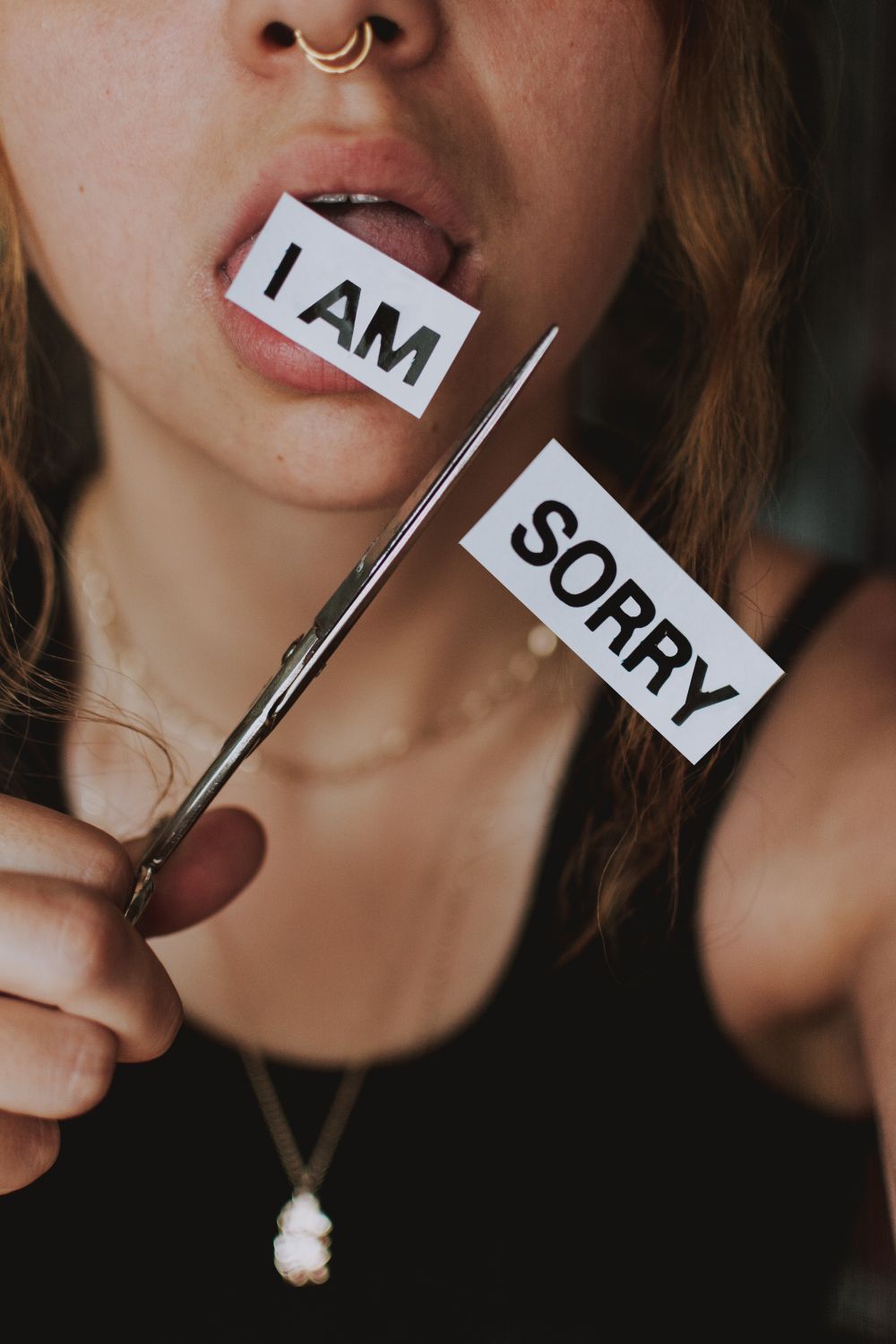
It’s so rare for people to say “I was wrong, I am sorry” because most people are already struggling so much that they can’t bear that additional psychological burden of also saying that out loud.
And yes, this does mean that listening to people and being kind to people is a great service indeed.
I hope this was helpful.
I love you so very much.
Your star sister,
Tunia
For Era of Light
Video: https://www.youtube.com/...