Showing posts with label Carl Jung. Show all posts

Sunday, April 9, 2023

The Hero Archetype: 11 Signs You Have This Fascinating Personality Type

The Hero Archetype: 11 Signs You Have This Fascinating Personality Type 

By Janey Davies, B.A. (Hons)

Posted on April 9, 2023
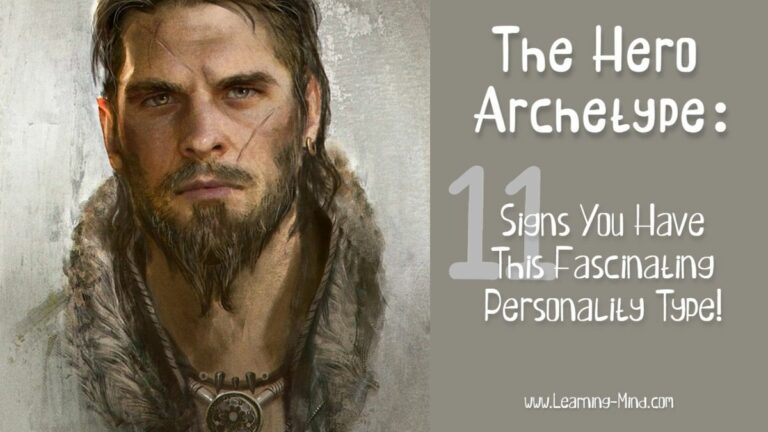


The Hero Archetype is the most recognizable of all Archetypes. We can all name the character traits of a hero. They must be brave, and fearless, defeat some awful foe, save the world and be altogether marvellous.

The Hero is most prevalent in books, films, myths, and legends. This is because heroes often have an interesting story arc. They may have started off as the Magician or the Rebel, but then circumstances forced them to change. This makes the hero one of the most interesting of the Archetypes.


The Hero Archetype

“The hero’s main feat is to overcome the monster of darkness: it is the long-hoped-for and expected triumph of consciousness over the unconscious.” Carl Jung

Archetypes are distinct characters with a particular set of personality traits. According to Carl Jung, there are 12 Archetypes. These include the Jester, the Sage, the Caregiver, and the Ruler.

By grouping people into categories, we can immediately identify with a certain type of character. We have an insight into their personality, qualities, weaknesses, and nature. In this article, I’m focusing on the most popular of the Archetypes, the Hero.

11 Signs You Have the Hero Archetype Personality

  1. Carl Jung devised the 12 Archetypes. Although storytellers use them in literature and media, studies have shown certain traits are pertinent to the Hero Archetype.Conviction: You have the courage of your beliefs
  2. Protective: You are concerned for the welfare of others
  3. Empathic: You see things from many perspectives
  4. Moral Integrity: You have a strong moral compass
  5. Self-sacrifice: You put other people’s needs before your own
  6. Selfless: You risk your own well-being for others
  7. Bravery: You are courageous and face your fears
  8. Determined: You don’t give up easily
  9. Strength: You have a strong sense of what’s right
  10. Honesty: You have no hidden agendas
  11. Inspirational: People look up to you

Examples of the Archetype of the Hero in Literature and Movies

Classic Hero


The classic hero is exactly what you’d expect a hero to be. These are the swashbuckling knights in shining armor. They rise to the challenge, defeat the bad guy, kill the dragon, rescue the damsel in distress and recover the treasure.

Examples of the classic hero: Westley from The Princess Bride, Luke Skywalker, and Harry Potter.

Superhero

Superheroes are easy to recognize. They have superpowers which are handy when you’re saving the world. Superheroes have become popular over the last few decades. Batman, Superman, and the Avengers have all been re-imagined to appeal to a new audience.

Examples of superheroes: Wonder Woman, Superman, Iron Man.

Everyday Hero

Everyday heroes are perhaps the most interesting. Typically, they’re reluctantly thrust into the role of hero. They don’t possess hero qualities but step up to the challenge, regardless.

The Everyday Hero has no superpower. However, they do have a strong moral code. These are ordinary people, forced to make a stand in extraordinary circumstances.

Examples of everyday heroes: Sarah Connor from The Terminator, Ellen Ripley from Alien, and Bilbo Baggins from The Hobbit.
Tragic hero

The tragic hero usually comes a cropper at the end of his story. He might make a series of wrong decisions that lead to his demise, or he may have a character flaw that contributes to his misfortune. We are sympathetic to tragic heroes because we can relate to their weaknesses or understand where they went wrong.

Examples of tragic heroes: Macbeth’s obsession with power, Michael Corleone’s gradual decline from moral-bound son to Godfather, and Anakin Skywalker’s journey to the Dark Side.

Anti-Hero

Anti-heroes do not possess typical heroic traits. They are morally bankrupt, flawed in character and rail against society. Anti-heroes do the right things but for the wrong reasons. They might use illegal methods to achieve their goals.

Serial killer Dexter is a great example. He only kills criminals and although killing is wrong on any level, a part of us enjoys the retribution. However, to cover his tracks, he ends up killing innocent people.

Examples of anti-heroes: Walter White from Breaking Bad, Lisbeth Salander from The Girl With The Dragon Tattoo, Captain Jack Sparrow.

Epic Hero


Epic heroes are prevalent in myths and legends. They might possess great strength or superhuman courage. They will have a quest or heroic deed to perform. Imagine Spartacus or Charlton Heston in Ben Hur.

Examples of epic heroes: King Arthur, Gladiator’s Maximus, and Jason and the Argonauts.

The Hero Archetype in Branding

Not only are Archetypes an interesting tool for writers, but they’re also useful in advertising. Archetypes are universally known, so they help get your message across quickly and efficiently.

The book “Archetypes in Branding” suggests we can break the archetype of the hero down into four categories:

Warrior

Brands that use the Warrior archetype want to appear fearless, daring, and courageous. These are the winners of life, the risk-it-all and do-it-anyway types.

Examples: Nike – ‘Just Do It’, the Royal Marines

Athlete

The Athlete archetype is determined and goal-focused. Athletes are the best in their field; they are the Olympians that work hard to achieve their dreams.

Example: Adidas – ‘Impossible is Nothing’

Rescuer

The Rescuer’s hero qualities are bravery and concern for others in need. Rescuers put the weak and vulnerable before them. This is a compassionate slant on the Hero Archetype.

Example: The Red Cross

Liberator

Liberators are freedom fighters. They provide a voice, product or service to many. The Liberators are not to be confused with anarchy or a lack of responsibility.

Examples: PayPal, Amazon

Conclusion

Do you recognize yourself as a Hero Archetype from the above descriptions? Even if you’ve realized you’re not the hero, understanding the traits of the hero archetype enriches the narrative of films, books, and plays.

References:


Janey Davies


Sub-editor & staff writer at Learning Mind
Janey Davies has been published online for over 10 years. She has suffered from a panic disorder for over 30 years, which prompted her to study and receive an Honours degree in Psychology with the Open University. Janey uses the experiences of her own anxiety to offer help and advice to others dealing with mental health issues.

Copyright © 2012-2023 Learning Mind. All rights reserved. For permission to reprint, contact us.

Tuesday, February 7, 2023

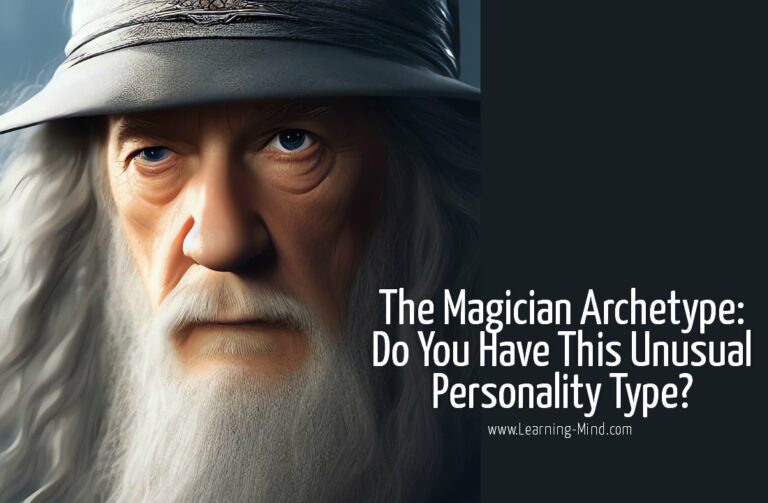
The Magician Archetype: 14 Signs You Have This Unusual Personality

The Magician Archetype: 14 Signs You Have This Unusual Personality 

By Janey Davies, B.A. (Hons)

Post on February 7, 2023


Are you the type of person who values science and spiritual knowledge? Do people think of you as creative, insightful, funny, or inventive? Are you intrigued by ancient knowledge and new discoveries? If so, you might identify as the Magician Archetype.

Magicians are truth-seekers who use their wisdom to create and transform the world around them. They can see the world in different ways. Magicians are the innovators and the visionaries, able to connect with their subconscious, turning ideas into reality.

We see magicians in books and films, depicted as the mystical shaman persona aiding the hero or heroine on their quest. They aren’t common in real life. And this makes them so fascinating.

So, do you have the archetype of the magician? Let’s find out.

What Is a Magician Archetype?

“If you dream it, you can be it.”

Psychoanalyst Carl Jung developed the idea of the 12 Archetypes. The Magician is the most fascinating. Magicians use knowledge and creativity to advance their ideas. They examine different strands and disciplines. Magicians have no problem mixing ancient theories with innovative science.
Do You Have the Magician Archetype Personality? Answer These 14 Questions Below to Find Out:Do people describe you as charming?
Are you good at reading between the lines?
Do you use lateral thinking when faced with a problem?
Can you see the bigger picture or broader point?
Do you always have a witty story up your sleeve?
Are you adaptable and flexible?
Do you have an interest in the spiritual and the scientific?
Are you a bit of a control freak?
Do you tend to be the center of attention?
Can you come up with ingenious solutions?
Do you rely on gut instinct when making a decision?
Are you able to read other people?
Do you prefer jobs that require creative thinking?
Is it important for you to pass on knowledge?

Magician Archetype Traits

Magicians gain knowledge and wisdom. They want to advance, advise, and further humankind. Those wanting advice or wisdom may approach the Sage Archetype for counsel. Magicians give their ideas and knowledge to the world.

The Magician Archetype thinks outside the box. They turn visionary ideas into reality. They inspire others with their creativity and original thought processes. Think of a magician performing. They pull a rabbit from a hat and astound their audience.

Who could have predicted the impact of Apple? What sort of person decides that vacuum cleaners work better without a bag? Would you have come up with an idea for a social platform where people can share thoughts, feelings, and pictures?

Visionary: All Magicians are visionaries, but visionaries see the possibilities where others do not. The Magician Archetype comes up with imaginative ideas. These ideas can change the world.

Innovative: This archetype can dream of an idea and make it happen. Nothing is off the table. No idea is too problematic. Magicians are enterprising individuals ahead of their times.

Transformative: Magicians change the world around them, using ancient and scientific means. This futuristic archetype wants to shake up the status quo. They break through traditional methods, not with minor changes but in tremendous leaps.

Inspirational: The Magician Archetype inspires others with their innovative thinking and drive for advancement. Magicians show what they can achieve, and this influence is infectious.

The Magician Archetype’s Strengths and Weaknesses

Magician Strengths

Magicians can think beyond what they already know, using intuition and unconscious insight. They are quick-witted and rely on their gut feelings. They can adapt. Magicians have the gift of seeing the world in new and interesting ways.

You might think that this wise archetype is all-seeing and all-knowing, but they would be the first to admit they don’t know everything. They are always learning and seeking out new knowledge. Magicians soak up information, add what they already know, and then pass it on.

The Magician is objective and reflective. They take a holistic approach to problem-solving. Magicians are cunning and resourceful and can find solutions to impossible problems.

Pulling that proverbial rabbit from an empty hat is the perfect metaphor for the Magician. They are the transformers, the innovators, and the inventors who manifest dreams into reality. Instead of sticking with traditional methods, they see options and alternatives.

Magician Weaknesses

The Magician’s ability to absorb and use knowledge can make them a powerful ally, or a formidable foe. Loki, the God of Mischief, is a good example of the Magician Archetype using his power to create chaos and disruption. Magicians also like to control their environment; whether this is behind the scenes or strategically.

One of the weaknesses of the Magician is procrastination. Accumulating so much knowledge provides a myriad of options and decisions. It can be difficult to make a decision when you use so many sources of information. Which one do you rely on?

Although Magicians use intuition and unconscious insight, they are objective. As such, they can forget there is a human cost to their actions. Being able to detach yourself from emotional situations isn’t necessarily bad. In some jobs, it is essential. However, personally, it can lead to a lonely existence.

Some Magicians are overly critical of others. Their ability to assimilate knowledge and information makes them impatient with those who hold more traditional or entrenched views. They become skeptical of the world around them.

Magician Archetype Examples

There are many examples of the Magician Archetype in literature. For example, Merlin is the all-powerful advisor in Arthurian legend, Gandalf is the wise wizard in The Hobbit, and Melisandre is the all-knowing witch in Game of Thrones. You also have Obi-Wan Kenobi and Yoda from Star Wars.

There are real-life versions of Magicians. Albert Einstein is probably the best example, but you can count alongside him people such as Nikola Tesla, Elon Musk, Steve Jobs, and James Dyson. In the UK, Derren Brown is a magician and mentalist, but unlike some of his peers, Brown lets us into the secrets of his performances.

Then some brands use the archetype of the Magician. I have already talked about Dyson. James Dyson completely revolutionized the vacuum industry. Apple, Xbox, and DreamWorks are creative companies that make you think ‘Anything can happen’. It is this sense of innovation and magic that typifies the Magician Archetype.

Final Thoughts

The Magician Archetype is one of the most fascinating of all of Jung’s Archetypes. Magicians see the world differently. Their insight, intuition and knowledge are drawn from spiritual and scientific realms. Not only can they visualize the impossible and turn it into reality, but they inspire us to as well.

References:


Janey Davies


Sub-editor & staff writer at Learning Mind
Janey Davies has been published online for over 10 years. She has suffered from a panic disorder for over 30 years, which prompted her to study and receive an Honours degree in Psychology with the Open University. Janey uses the experiences of her own anxiety to offer help and advice to others dealing with mental health issues.