12 Famous People with Borderline Personality Disorder
By Janey Davies, B.A. (Hons)
Posted on April 24, 2023
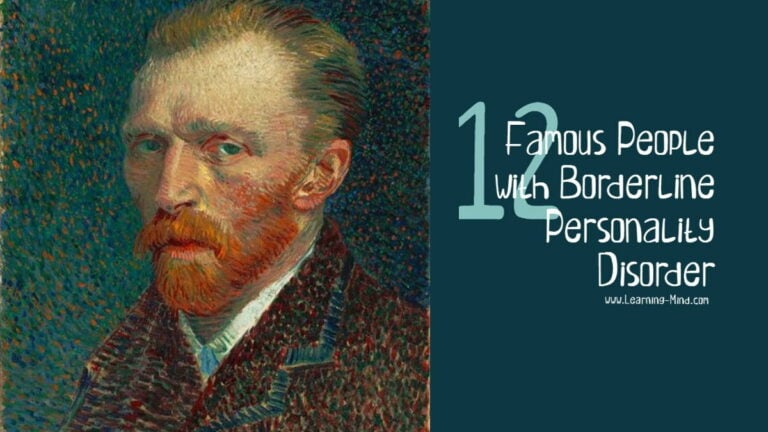
Is it possible to diagnose famous people with borderline personality disorder (BPD)?
BPD is a psychological disorder affecting a person’s emotions and identity. It affects the way a person copes with the wider world. This leads to problematic relationships and high-risk behaviors. For this article, I’ve examined the symptoms of BPD and cross-referenced them with famous people known to suffer from mental health problems.
Before I talk about potential famous people with BPD, what are these behavioral traits?
Behavioral Traits of Borderline Personality Disorder
Emotions: Suffers from BPD experience extreme emotions. They feel intense happiness or sadness, love or hate. There is no middle ground.
Relationships: These extreme emotions lead to intense feelings for partners. BPD sufferers’ become obsessive and fanatical.
Black and white thinking: The BPD sufferer sees things in black and white; either something/one is all good or all bad. There’s no grey area.
Idealize or Split: This black-and-white thinking affects relationships. BPD sufferers idolize their partner, or, because they fear abandonment, they begin to hate or devalue them.
Fear of abandonment: An intense worry bordering on a phobia of being abandoned, which leads to clingy, manipulative and desperate behavior.
Distorted self-image: Unstable sense of self which fluctuates between extreme views, such as crushing shame or overconfidence.
High-risk behaviors: Symptoms of BPD include engaging in impulsive and risky behaviors such as promiscuity, binge drinking, gambling, spending money, reckless driving and extreme sports.
I cannot be certain that the following famous people have BPD, however, I can identify certain behavioral traits that point to a diagnosis of this disorder. Here are my suggestions:
12 Famous People with Borderline Personality Disorder
1. Philip K. Dick – Reckless behavior/extreme emotions
“I experienced an invasion of my mind by a transcendentally rational mind, as if I had been insane all my life and suddenly I had become sane.”
I believe Philip K Dick is one of the greatest science fiction writers of all time. His themes revolve around a shifting sense of consciousness; what is our perception and how this relates to the external world? Dick suffered from mental illness, drug abuse, and psychosis throughout his life.
He was married five times with many of his relationships ending fractiously. He had one wife committed to a psychiatric facility, and he deliberately drove his car off the road with a girlfriend in the passenger seat. His extreme reactions within his relationships make me think he could suffer from BPD.
2. Jeffrey Dahmer – Fear of abandonment/ reckless behavior
US serial killer Jeffrey Dahmer had an unconventional childhood. His parents left him to care for himself at a young age after his parents left the family home. This left Jeffrey with a profound fear of abandonment. He lived in an apartment in Milwaukee where he invited young boys and men back to drink. Jeffrey had abused alcohol from an early age.
However, it was only when the boys wanted to leave when Jeffrey drugged and killed them. His aim was to create a ‘zombie-like’ human that would never leave him.
Jeffrey tried drilling holes into his victim’s skulls and injecting bleach into their brains but ended up killing them. He kept several skulls and bones arranged on a makeshift altar. Jeffrey crammed his apartment with barrels of decomposing flesh. He admitted he ate parts of his victims and slept with their dead bodies.
3. H.P. Lovecraft – Distorted self-image
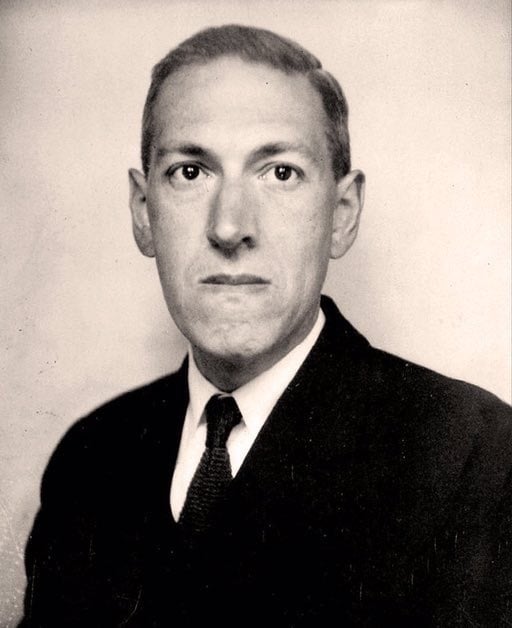
Science horror writer H. P. Lovecraft suffered a spate of family deaths from which he never really recovered. Lovecraft’s father died when he was a young child and he lived with his mother, several aunts and his grandparents. His grandmother died, which sent Lovecraft spiraling into a depression that deteriorated through the years.
His grandfather died suddenly after suffering from a devastating business failure. Lovecraft’s family life changed instantly from one of warmth and wealth to poverty and loneliness. Lovecraft began writing but was so sensitive to criticism of his work that he would withdraw it immediately. His aunt described his mental state at the time as:
“…so hideous that he hid from everyone and did not like to walk upon the streets where people could gaze on him.”
4. Jodi Arias – Extreme emotions
Jodi Arias came to worldwide media attention after a court convicted her of killing her ex-boyfriend, Travis Alexander. Jodi was obsessed with Travis and idealized him and their relationship. She may have seen herself climbing up the social ladder by dating Travis, but it became clear during the trial that he was not interested in a serious relationship.
Feeling rejected, Jodi stabbed him 27 times and shot him in the head. At first, Jodi blamed his death on intruders but later said she had acted in self-defense as she was a victim of domestic abuse. A jury found her guilty of first-degree homicide and sentenced her to life without parole.
5. Diana, Princess of Wales – Idealization of partner
If you are old enough to remember the wedding of Prince Charles and Lady Diana, it would have swept you along with the fairy-tale. However, the truth of this relationship is that the ending was tragic. You could call Diana young and naïve, and in all fairness, she was.
Just 19 years old when she met Charles, she had already experienced the breakdown of her parent’s marriage and now faced the relentless pursuit of the media.
The press widely documented her eating disorders, but I believe her idealization of Prince Charles accounted for her deteriorating mental state. She bought into the fairy-tale just as we did and is at number 5 on my famous people with borderline personality disorder countdown.
6. Edgar Allan Poe – Risky behaviors
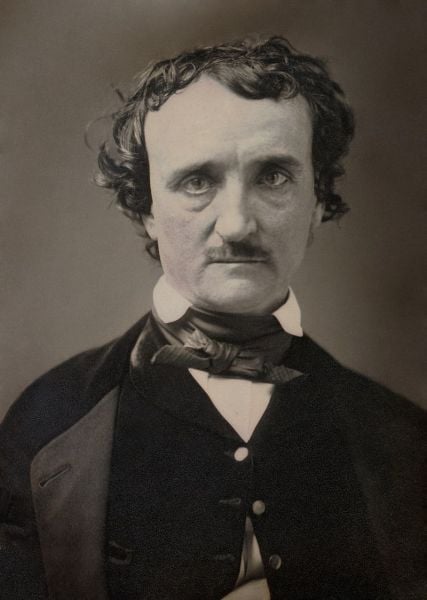
“I am constitutionally sensitive—nervous in a very unusual degree. I became insane, with long intervals of horrible sanity.”
Gothic mystery writer Edgar Allan Poe exhibits several symptoms of BPD. He had a fractious relationship with his estranged foster father. His foster father was a wealthy man and subsidized Poe’s university education.
However, Poe indulged in risky behaviors, such as gambling, and drew up debts, which meant he could not afford to pay rent on his dorm or buy books. Poe eventually left university seriously in debt but would not move back home as his childhood sweetheart had married another man.
7. Michelangelo – Black and white thinking
It is a testament to Michelangelo’s talent that the Pope commissioned him to paint the vaulted ceiling of the Sistine Chapel. This structure holds enormous importance within the Catholic Church, so it would have been an enormous honor for the Italian painter.
Many consider him to be the world’s greatest sculptor. He would use a complete block of marble to create his figures, but they were so lifelike they looked as if they had emerged from the stone.
Yet, depression and anxiety beset Michelangelo throughout his life. Despite his extraordinary work, he viewed painting as a lesser medium than sculpture. Michelangelo was a melancholy figure, with a few friends, who would argue with his patrons. He frequently fell out with his commissioners, which I believe is because of his tendency to black and white thinking.
“I lead a miserable existence and reck not of life nor honor – that is of this world; I live wearied by stupendous labors and beset by a thousand anxieties. And thus I lived for some fifteen years now and never an hour’s happiness have I had.”
8. Ernest Hemingway – Risky behaviors/suicidal tendencies
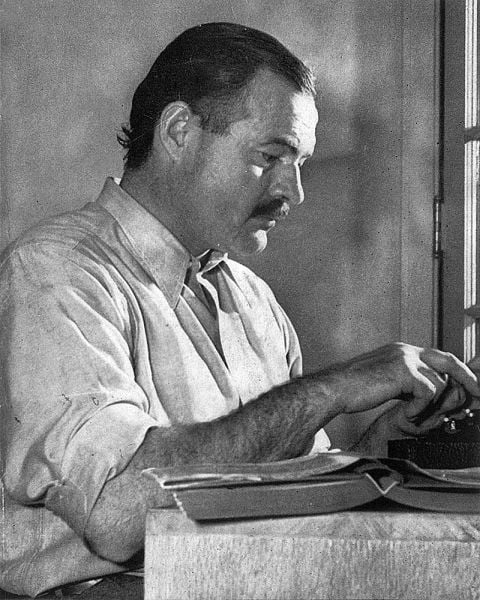
Ernest Hemingway’s mental health is well-documented. He was an alcoholic, severely depressed, and prone to suicidal thoughts. However, I want to focus on his risky behavior, which to me, points to borderline personality disorder. Hemingway had a defective eye which excluded him from military service, but somehow, he entered World War I as an ambulance driver.
He also flew on many RAF fighter missions in WWII and made several trips to Spain as a war correspondent. After the war he hunted big game, watched bullfighting in Spain and took out his own fishing boat. Married four times, Hemingway committed suicide by shooting himself in 1961.
9. Franz Kafka – Distorted self-image/suicidal thoughts
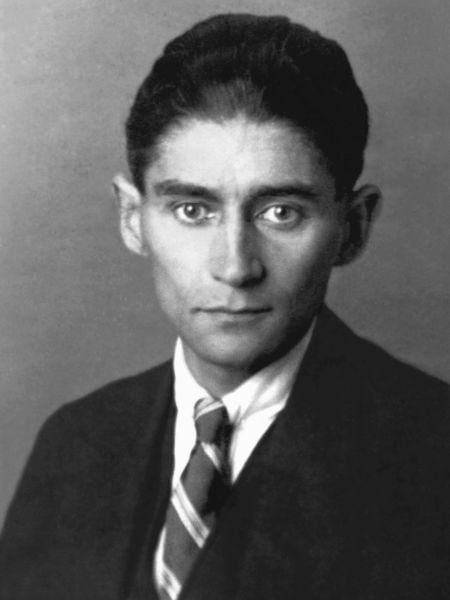
Image courtesy kafkamuseum.cz
“What have I in common with Jews? I have hardly anything in common with myself and should stand very quietly in a corner, content that I can breathe.”
Anyone noticed a theme yet? It is not altogether surprising to see another author who radicalized the human experience in my famous people with borderline personality disorder countdown. Despite his unique take on life, Kafka was shameful about his looks, sexual prowess, and more.
Kafka believed he repulsed women. He had low self-esteem and critics describe him as having ‘parasite dependency needs’. It is reported that he suffered from an eating disorder, depression, and suicidal thoughts.
10. Vincent van Gogh – Impulsive acts, wild mood swings
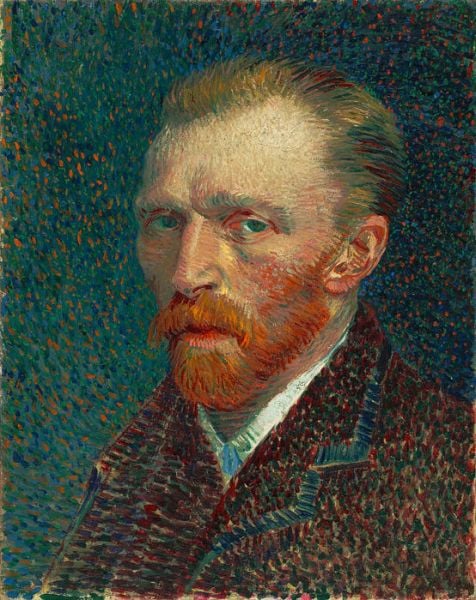
Self-portrait, 1887
You don’t have to be an art lover to know a Van Gogh painting when you see one. Van Gogh’s sweeping brushstrokes and radical use of color are his signatures. Like many creative geniuses, his personal life was fraught with bouts of depression, mood swings, and impulsive acts (he supposedly cut his ear off after an argument).
Van Gogh experienced psychotic thoughts and behavior which led to him spending months upon months in asylums at his own request as he veered from serenity to utter despair. Loneliness and feelings of inadequacy plagued Van Gogh. He shot himself in a suicide attempt but did not die instantly as he’d hoped. He passed away a few days later from his wounds. After he shot himself he said:
“I shot myself.…I only hope I haven’t botched it.”
11. Aileen Wuornos – Risky behavior
Aileen Wuornos is one of those rare breeds; a female serial killer. Aileen indulged in risky behavior to ensnare and trap her victims. She acted as a sex worker, enticing men to engage in sexual activity before shooting them. Aileen’s childhood was chaotic. Her parents abandoned her at a young age, and she lived with her grandparents.
By the time she attended school, she was already selling her body for food, drugs, and cigarettes. Her grandfather and his friend raped Aileen, and she became pregnant at 14 years. Authorities took her son and put him up for adoption.
Aileen’s grandfather threw her out of the house after the death of his wife. She was 15 and began living on the streets, selling her body to support herself. Police eventually caught her and a jury sentenced her to death.
12. Susan Leigh Smith – Fear of abandonment
My final entry on the list of famous people with borderline personality disorder is Susan Leigh Smith. Susan gained notoriety in the US media as the mother who drowned her two sons in 1994. Susan claimed a black man had kidnapped them in a carjacking gone wrong. However, her defense team argued for Susan’s poor mental health to be taken into consideration.
Susan had previously attempted suicide on two occasions, the latter attempt made when her married lover ended their affair. She was married at the time of the offense, but desperate to start a relationship with a wealthy local man. He, however, had stated his lack of interest in children and rejected her advances.
Prosecutors believe this was the reason she murdered them. Mental health experts diagnosed Susan with dependent personality disorder, but I think her fear of abandonment led her to take such tragic action.
Final Thoughts
I am only suggesting that the above are famous people with borderline personality disorder. Do you agree? Who would you suggest if you were asked?
Janey Davies

Sub-editor & staff writer at Learning MindJaney Davies has been published online for over 10 years. She has suffered from a panic disorder for over 30 years, which prompted her to study and receive an Honours degree in Psychology with the Open University. Janey uses the experiences of her own anxiety to offer help and advice to others dealing with mental health issues.
Copyright © 2012-2023 Learning Mind. All rights reserved. For permission to reprint, contact us.
Janey Davies
Sub-editor & staff writer at Learning Mind
Janey Davies has been published online for over 10 years. She has suffered from a panic disorder for over 30 years, which prompted her to study and receive an Honours degree in Psychology with the Open University. Janey uses the experiences of her own anxiety to offer help and advice to others dealing with mental health issues.
Copyright © 2012-2023 Learning Mind. All rights reserved. For permission to reprint, contact us.