The Future of Medicine
Dr. Mendoza is the Teacher
Received by Valdir Soares
Posted on April 10, 2025
© The 11:11 Progress Group.
Rest assured, I will not fault you; be sure you too, do not fault me
– Thought Adjuster, March 2014.
The Inner Voice Gide Us Into Strength and Self-Trust
© The 11:11 Progress Group.
Rest assured, I will not fault you; be sure you too, do not fault me
– Thought Adjuster, March 2014.
Posted on March 14, 2025
![]() |
| Credit ti larason.es |
English translation by Anyas Spencer.
© The 11:11 Progress Group.
Take the People to the Starting Gates,
to let them run their own Race –
Machiventa, 2000.
Posted on June 16, 2024

For spiritual people, this is often one big reason why…
Poverty can afflict spiritual seekers more than others because of past lives. Often in the past, a serious-minded spiritual seeker would incarnate for the purpose of exploring life as a monk or a nun.
The vow of poverty that came with such a decision was no problem. At the time, it was a great idea. After all, they would be supported in their life of service by a monastery or nunnery. The problem is what happened later.
You were born into this life with a full memory of all your past lives – and vows – tucked away in your subconscious mind. Vows that had no expiry date keep on affecting you. They keep on going and going, molding the way your conscious mind sees life.
Many of us have been monks or nuns in past lives, renounced money, and trained ourselves to think that money is a distraction from spiritual pursuits. Then, in this life, we wonder why money becomes such a focus, simply because there is never enough of it to pay the bills!
Poverty and Prosperity
In my case, I have spent this entire life as a dedicated spiritual seeker. I have experienced poverty and I have experienced prosperity. As a child, my family was so poor that I was one of the few kids who qualified for free meals at school. Shopping for fun never crossed our minds; we only replaced clothes and shoes when the old ones were well and truly worn out.

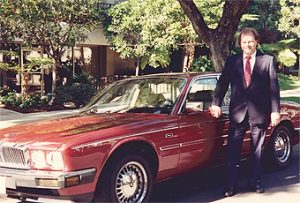
I went the whole nine yards. Tailor-made suits and shirts, a shiny Rolex, five-star dinner parties that started with champagne and caviar. It was fun while I explored a new view of life, even if it was tiring to keep running inside that “hamster wheel” all day at the office.
Did all that detract from my spiritual pursuits? Not at all. I learned more new things about spirituality at that time than I ever had before. The monk thing didn’t get in my way because I’ve never done a vow of poverty in any past life. I was a monk once, back when the Buddha was alive, but that was at a time when the whole poverty vow idea hadn’t been invented yet.
So, unencumbered by a vow of poverty that can haunt a person’s subconscious mind, I showed that a person can be poor or prosperous – either way, there’s no barrier – it’s simply a choice.
Now, if you have been haunted by the conviction that poverty is next to saintliness and find yourself continually struggling to pay the bills, what choice do you have? Well, you can dig up that old vow of poverty and consciously release yourself from it, even if you don’t remember the past life details about how and when it happened.
Poverty used to allow monks and nuns to focus on serving their institutions. In today’s commercial world, however, it causes severe, life-choking limitation. If you harbor the hidden belief that your bank account should be perpetually empty, then by letting go of that unconscious, constrictive belief in poverty you will open up huge avenues of personal freedom.
A life of adventure and discovery awaits you
In today’s world, especially when you are retired, you can only pursue your greatest joys if you have the necessary resources. Travel, study, adventures and hobbies all take funds. At one time, a vow of poverty let you focus on your purpose. Today, however, it can make you miss out on many of the potentially fun experiences and consciousness-expanding opportunities in life.
I am about to give you a way to release any vow of poverty that may be residing in your subconscious mind. Once you have released such a barrier to your own natural abundance, you can create a new life of freedom from financial limitation.
Thoughts are creative. When you focus an intention, the nature of the universe is to mold itself into that intention. The universe is abundant. If you think you have lack, the universe will create the perception of lack; then your life will be filled with an abundance of lack.
The Missing Part of “The Secret”
Of course, prosperity doesn’t just materialize because you wish it to be so. Intention alone won’t do the trick. The Law of Creation has three parts: Intention, Feeling, and an essential third component – Action. What action is needed?
Increase the value of your service to society. Observe what people need and help them connect with it. Whatever new skills you need to make yourself more useful, there are books that will teach you these at little or no cost.
Once you release any subconscious vows that no longer serve you, it feels perfectly fine to accept a financial exchange of energy for services rendered.
Money is an energetic measure of your value to others. Its abundance makes you abundantly free to choose.
Now, you’ve probably heard that the love of money detracts from spiritual pursuits, and so it does. But let’s get it right. It’s the LOVE of money that’s the issue, not the money itself or the practical requirement that you will be fairly paid for your services.
After all, money is the way we share our labors in this complex modern world. We are no longer in the agricultural age, trading potatoes for milk or clothes or wood. We specialize in our work and we use the form of energy called money as a medium of exchange for an endless variety of the results of other people’s specialties.
If you don’t enjoy the full freedom of the financial abundance that you deserve as a spiritual person, do the following release exercise. The result can be like the difference between night and day.
Here’s Your Ticket to Freedom
Right now, make the following personal declaration of release. Enter a quiet state, become inspired by the thought of the conscious universe or the ultimate state of Infinite Being and then declare with feeling;
“By the power vested in me by my existence within Infinite Being, I now cancel all unconscious vows and obligations which no longer serve me. I thank them for how they have served me in the past and I release them now. I replace them with the unconditional love and abundance which flows through all of Creation. I AM Infinite Being.”

The world is waiting for you to become free in every way to rise to your life’s full potential.
For more crystal-clear insights into spiritual metaphysics, sign up for our free Sunny Sundays newsletter.
*Owen Waters is the author of the book, Soul Inspiration: Unleash the Power of Your Higher Consciousness to Dissolve Problems and Create a Better Life.
Posted on January 22, 2024

How in the world can anybody possibly claim that the U.S. economy is in good shape? Honestly, I don’t see how anyone can make a rational argument that this is the case. Actually, the only people who seem to be trying to claim that the U.S. economy is heading in the right direction are those in the upper tiers of the economic food chain. At this stage, those in the lower tiers of the economic food chain are very well aware of how much they are suffering. Poverty, homelessness and hunger are rapidly growing all over America right now. But if you still have plenty of money and those around you still have plenty of money, you may be wondering what all of the fuss is about. If you are one of those people, hopefully this article will be a wake up call for you.
Let’s start with the housing market. On Friday, we learned that sales of previously owned homes in December 2023 were 6.2 percent lower than they were in December 2022…
Sales of previously owned homes fell 1% in December compared with November to 3.78 million units on a seasonally adjusted annualized basis, according to the National Association of Realtors. Sales were 6.2% lower than in December 2022, marking the lowest level since August 2010.
Meanwhile, large layoff announcements continue to pile up at a very frightening pace.
For example, Macy’s just announced that it will be laying off a total of 2,350 workers…
Department store chain Macy’s is planning to lay off about 13% of its corporate staff and close five stores in an effort to trim costs and redirect spending to improve the customer experience.
The Wall Street Journal first reported the news on Thursday, adding that the job cuts will total about 2,350 positions, or about 3.5% of Macy’s overall workforce excluding seasonal hires.
And Wayfair is telling us that somewhere around 1,650 of their workers will soon be hitting the bricks…
Wayfair is cutting 13% of its global workforce as the digital home goods retailer continues its efforts to trim down its structure, cut out layers of management and reduce costs after going “overboard” with corporate hiring during the Covid pandemic, it announced Friday.
The company plans to lay off around 1,650 employees, including 19% of its corporate team, with a focus on people in management and leadership positions, Wayfair said.
I apologize in advance if there are some major layoff announcements that I miss in the days ahead.
We are witnessing such a large tsunami of layoffs now that it is virtually impossible to keep up with them all.
On the west coast, employees of the Los Angeles Times are extremely upset about the “massive” layoffs that are reportedly coming…
With “massive” and “significant” layoffs coming soon, “the L.A. Times Guild announced a one-day walkout from both its L.A. and Washington D.C. offices this Friday,” reports TheWrap.
Staffers are “abstaining from work for the entire day while also staging a rally. It’s the first union work stoppage in the newsroom’s history, according to the union, dating back to when it started printing in 1881.”
This act of suicide is called the “Rally to Save Local Journalism” and will take place Friday at noon.
And earlier today I was stunned to learn that the entire staff of Sports Illustrated is being terminated…
Following through on a warning earlier this month, Authentic Brands Group has revoked Sports Illustrated’s icense to publish due to a missed payment.
As a result of the move, the entire staff of the 70-year-old print and online publication was notified on Friday that their jobs were being eliminated.
“We appreciate the work and efforts of everyone who has contributed to the SI brand and business,” SI operator The Arena Group wrote in a memo to employees that set off outrage on social media.
Once upon a time, Sports Illustrated was a truly great magazine.
Sadly, those days are long gone.
There is so much bad news these days.
At this point the economic outlook is so troubling that even Google is getting ready to conduct yet another round of layoffs…
Google has laid off over a thousand employees across various departments since January 10th. CEO Sundar Pichai’s message is to brace for more cuts.
“We have ambitious goals and will be investing in our big priorities this year,” Pichai told all Google employees on Wednesday in an internal memo that was shared with me. “The reality is that to create the capacity for this investment, we have to make tough choices.”
So far, those “tough choices” have included layoffs and reorganizations in Google’s hardware, ad sales, search, shopping, maps, policy, core engineering, and YouTube teams.
Of course what I have shared with you above is just a small sampling of what is really going on out there. For many more recent layoff announcements, please see my previous article entitled “Alert! Here Is A List Of 20 Large Companies That Have Just Decided To Conduct Mass Layoffs”.
Before I end this article, I wanted to update all of you on the horrifying stock market crash in China.
Zero Hedge is reporting that Chinese stocks just experienced their “worst weekly loss since March 2023″…
Amid ‘snowball derivative liquidations‘, China’s stock market is falling faster than its population.
The Hang Seng China Enterprises Index crashed 6.5% this week – its worst weekly loss since March 2023 with Wednesday seeing the biggest daily loss since Oct 2022 as the index plummeted to key support levels around the Oct 2022 lows…
The phrase “snowball derivative liquidations” really got my attention, and a lot of you know why.
I have been warning about the derivatives bubble in my books for over a decade.
Derivatives are going to become a very hot topic the closer we get to a full-blown implosion of the global financial system.
We are in far more trouble than most people realize.
2024 is going to be such a tumultuous year, but many of the “experts” will continue to insist that everything is “just fine” for as long as they can.
Michael Snyder
Posted on September 10, 2023
Posted on July 2, 2023

In a June 10 Tweet, Elon Musk, the embodiment of the electric vehicle (EV) revolution, declared that “ESG is the devil.”
ESG stands for the “environmental, social and governance” principles which dictate that certain aspects of a company’s work must be taken into account when deciding whether to invest in it. An investment-worthy company must have a good score on things like climate change, sustainability, energy efficiency, diversity, equity and inclusion, as well as corruption and bribery prevention, among others.
Musk’s outburst was sparked by the shockingly low ESG scores assigned to Tesla by S&P Global, a ratings and market intelligence heavyweight. Tesla earned 37 points (out of a possible 100, where anything above 70 is considered “good” and anything below 50 is deemed “poor”) on its ESG scorecard while Philip Morris, the global tobacco giant, received a commendable score of 84. Similarly, as the Washington Free Beacon discovered, the London Stock Exchange gave British American Tobacco a score of 94.
Perhaps, lighting up 20.3 billion tobacco products daily worldwide does wonders for the environment and sustainability.
The ESG turnabout wasn’t entirely unexpected. I had even published a recent analysis on how the World Economic Forum (WEF) and its factotums would ultimately take the fall for our crumbling liberal-globalist order. Musk is just one among a growing number of stalwarts to turn their backs on the global ESG train wreck. Insurance behemoth Lloyd’s of London recently announced that it was exiting from the net-zero alliance for insurers, and it was the sixth such organisation to do so within a week. There are good reasons for this shift. For starters, hundreds of ESG managers were stung by the recent collapse of Silicon Valley Bank, that had prioritized woke agendas over the security of its depositors.
The ESG agenda effectively forces firms to sacrifice business logic in favor of liberal lunacies marked by gender dysphoria, pseudo-diversity and climate militancy. As banks promoting this mania get bankrupted, one wonders how ESG initiatives are going to be funded down the line. Investment behemoths like BlackRock, Vanguard and State Street (aka Big Capital) are leading the global ESG rollback. The trio manage assets worth $22 trillion worldwide, amounting to a quarter of the global GDP, and they can no longer pander to socialist pies-in-the-sky. Big Capital thrives on trillion-dollar profits, not trillions of social media soundbites and hissy-fits.
Punitive threats, like the following prediction from KPMG, will not faze Big Capital: “By 2030, poor performers [will] have been weeded out and consistent non-compliance will be met with severe consequences including penalties, public naming, a prohibition to operate and even imprisonment. The C-Suite and Directors will now be personally liable for ESG breaches.”
Does anyone really believe that the Big Four (Deloitte, Ernst & Young (EY), KPMG and PwC, the world’s largest accounting networks) will agitate for punitive actions against their sacred cows? Big Capital virtually owns them. Even the British government plans to drop its flagship £11.6 billion climate pledge, prompting an infuriated Guardian to accuse Prime Minister Rishi Sunak of “betraying populations most vulnerable to global heating”.
Incidentally, KPMG had provided Silicon Valley Bank and Signature Bank (another failed entity) with a clean bill of health just weeks before their collapse. Neither the professorial definition of The Science nor the science of accounting added up in these cases. These champions of sustainability are also unable to sustain themselves as they have begun firing thousands of employees.
Here are five big reasons why the ESG agenda is doomed.
Renewable energy – a cornerstone of the ESG agenda – is not as clean, eco-friendly, efficient or as sustainable as advocates claim it to be.
In the area of battery technologies, science policy analyst David Wojick had deduced that the “grid scale storage” required to replace fossil fuels with wind and solar power in a “net zero” United States would cost $23 trillion – matching the nation’s annual GDP for 2021.
Apart from its unsustainable costs, the renewables ecosystem is also harmful to the environment. Solar panels contain a toxic mix of gallium, tellurium, silver, crystalline silicon, lead and cadmium, among others. It costs an estimated $20 to $30 to recycle one panel while only $1 to $2 is needed to consign the same panel to a landfill. It is a similar story with millions of tons of decommissioned wind turbine blades which themselves contain toxic materials that are leaching into the environment. Ironically, wind power is heavily dependent on oil and its byproducts throughout its production-to-operation lifecycle.
The net energy return on investments (EROI) from “renewable” sources remains abysmal. If and when proper recycling protocols are mandated worldwide, the renewable energy sector will collapse overnight. The growing affordability of EVs has less to do with government subsidies and more to do with the fact that only five percent of their batteries are recycled. And batteries constitute just one component of a highly-unsustainable renewables ecosystem.
The EV boom is significantly fueled by underpaid, underfed and underaged cobalt miners. Cobalt is an essential component of lithium-ion batteries and nearly 70% of global supplies are mined in the Democratic Republic of Congo. As Amnesty International reports, nearly 40,000 children slave away in these mines under the most appalling conditions. Perhaps they were energised by Greta Thunberg’s warning in 2018 that the world would end in 2023 unless fossil fuels were banned in toto? The embarrassing Tweet has since been deleted but the world did end for “hundreds, if not thousands” of Congolese children. Likewise, Glencore, a major player in the Congo cobalt sector, has deleted all contents from its dedicated ESG webpage.
One wonders whose childhoods are being stolen in a hypocritical and unmistakably racist global ESG regime? Third-world children will also reel from ESG-dictated reductions in Western farm outputs. Ireland and the Netherlands, among others, are planning to cull millions of livestock in order to “meet emissions targets” and “save the planet.” The science behind this madness was conjured up by the usual suspects such as KPMG.
A reduction in meat supply will create seismic imbalances throughout the global food ecosystem. The demand for plant alternatives such as pulses will skyrocket, tearing ever bigger holes in the pockets of vegans and meat-eaters alike. Meats sold at taxed mark-ups will be infused with mRNA vaccines. In the meantime, the WEF has a solution: worms, maggots and insects as a dietary option for the poor.
With the ESG gravy train trundling to a halt, freeloading activists may escalate their direct actions.
A group called Just Stop Oil and affiliate eco-anarchists are now vandalising fuel pumps when they are not gluing themselves onto roads and disrupting football matches. They have even vandalised the wax effigy of Britain’s climate monarch, Charles III, at Madame Tussauds museum in London. Coincidentally, Charles III – echoing Thunberg’s dire predictions in 2018 – has just launched a “climate clock” which gives humanity only six years before a climate armageddon. But here is the irony of ironies: Just Stop Oil is funded by the Climate Emergency Fund (CEF) which in turn received donations from Aileen Getty, the granddaughter of oil tycoon Jean Paul Getty.
Once the bottom of the ESG pork barrel is scraped threadbare, the ensuing anarchy will be off the charts. Anarchists may even turn on each other. A recent “pride parade” in London was railroaded by Just Stop Oil activists. It was Woke vs Woke!
As far as Big Capital is concerned, these anarchists have reached the limits of their usefulness. Social upheavals and lockdowns worldwide have enabled Big Capital to gobble up small and medium businesses at rock bottom prices. But if the current bedlam in France serves as a precautionary lesson, pre-emptive measures will be sought against the “savage hordes of vermin” who were once lionized as social justice warriors.
BlackRock has already assigned extra security measures for CEO Larry Fink and President Robert Kapito “over growing concerns for their safety.” They know what lies ahead.
Eco-anarchists who regularly invoke “The Science” somehow miss the low hanging fruits. One such ripe picking is in the area of toilet paper production and usage. A staggering 15% of deforestation in the United States alone is attributed to tissues that allegedly aggravate the global climate crisis with “every flush”. Despite this data, one has yet to hear of a single toilet paper stand being targeted by eco-anarchists anywhere. Timeless artworks by Vincent Van Gogh and Monet, on the other hand, are deemed offensive.
Eco-anarchists are just not interested in practical solutions. Bidets, for example, can drastically minimise toilet paper demand and deforestation. Furthermore, the bidet is no longer a resource-dictated compromise in the Third World. It is prevalent in technological powerhouses such as Japan and South Korea where the bowls are replete with hi-tech features such as volume, speed, temperature control, air-dryers and sometimes even music. Italy and France have a long bidet tradition as well.
But the science of bidet is too passive and workable for the anal anarchist. Agitprop professionals can only make a living through public theatrics; not by quietly switching habits in their private spheres. Emotionally damaged and/or cerebrally challenged children grow up into destructive adults. That is the wellspring from which anarchists emerge. Therefore, do not expect Thunberg and her ilk to call for sustainable hygiene habits – even as countless monies are flushed down the toilet on drag queen shows and gender dysphoria curriculums in schools. I just can’t see Greta yanking out toilet rolls from Swedish schools because they are stealing her childhood.
In any case, she is too busy promoting Ukraine’s eco-friendly war arsenal these days. As for the child slave miners of Congo, “let them eat cake” as Marie Antoinette once said.
There is a geopolitical dimension to Big Capital’s U-turn on ESG. Resource-rich sub-Saharan Africa is tilting towards the BRICS bloc, in particular China, even as the West implodes from within. A new generation of African leaders are ganging up to free their nations from the shackles of the West, IMF, World Bank and even the United Nations.
An alignment with the BRICS bloc will have to be accompanied by military, intelligence, and economic support as the West will not go down without a fight. The choice between either bloc should be a no-brainer for Africa. Western priorities are on LGBT rights while the East wants to capitalise on Africa’s critical infrastructure, education and agriculture needs in return for resource extraction.
Shrewder African leaders can even play up intra-BRICS rivalries, particularly between China and India, in order to get a better deal over priority projects. Big Capital, which owes no allegiance to any nation in particular, may likely join the bandwagon by tempering criticisms and sanctions from Western capitals. This is Africa’s opportunity to lose.
While Big Capital dials down its social justice commitments, much of the emerging world will be stuck with ESG-dictated policy commitments and grant allocations that will rapidly lose relevance in a VUCA (volatility, uncertainty, complexity and ambiguity) world. The ESG agenda may have started off with good intentions but like similar initiatives, it has been thoroughly hijacked by vested interests. Leaders and technocrats in much of the emerging world were likely swooned by the promises of a bold new ESG-fueled global economy. According to one estimate compiled by Bloomberg in 2021, global “ESG assets are on track to exceed $53 trillion by 2025, representing more than a third of the $140.5 trillion in projected total assets under management”.
Those mammoth assets, where they exist, may be appropriated to rebuild smouldering Western cities after this decade is over. But then, who knows? $53 trillion can also be channelled to create a digitised global medical gulag for our “collective safety”. ESG scores for corporations may be replaced by social credit scores for every individual. In that case, the previous 30 months may have served as a trial run…